
Your Custom Text Here
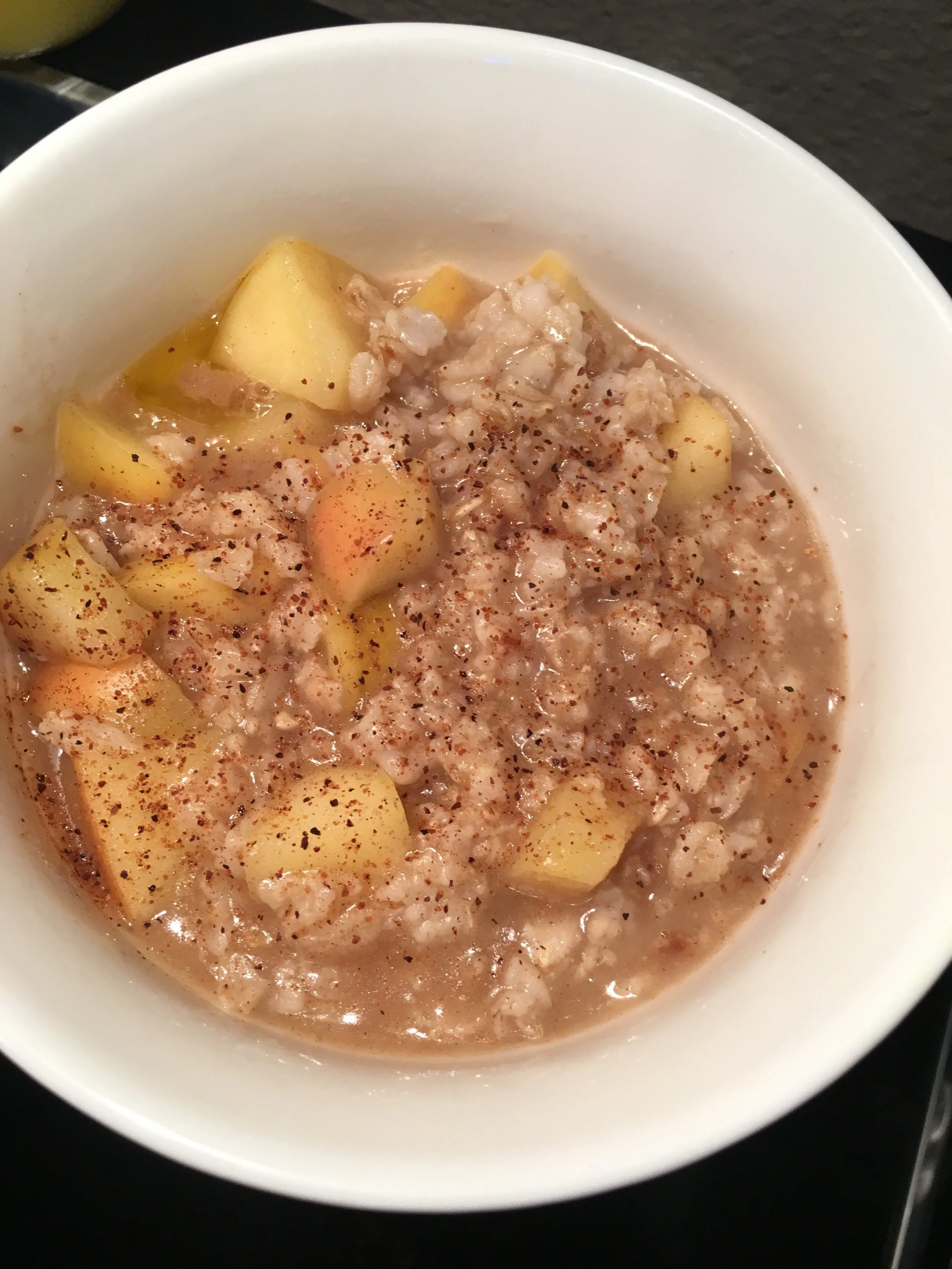
Stewed Apples and Oats
Give this scrumptious fall dish a try for breakfast!

Stewed Apples and Oats
This is one of my favorite fall/winter breakfasts! It is warm and nourishing. Apples are great for supporting digestion and elimination.
Dosha Considerations - Good for vata and pitta. Kaphas can reduce or avoid ghee and oats.
Serving Size: 1
Prep Time: 5 minutes
Cook Time: 10 minutes
INGREDIENTS
- 1 apple, cored, peeled + diced into 1/2 inch pieces
- 3/4 cup purified water
- 1/4 cup oats
- 1 tsp ghee
- Generous dash of ground cinnamon, nutmeg, cardamom and/or cloves
DIRECTIONS
- Add apples, water, oats and spices in a pot.
- Put on medium heat and cook until apples are soft. If there is excess water, continue to cook until it reaches your preferred consistency. Remove from heat.
- Let stand away from heat for 5 minutes to cool slightly before eating.

Tips to Naturally Defeat A Cold
Cold season has arrived. The rapid fluctuations in temperature and fall weather amp up the number of colds. Read more about six holistic tips to support you through the cold season!

When you find yourself or your loved ones under the weather there are many natural remedies at your fingertips that boost immunity. Below are six tips to support mind, body and spirit when the common cold gets you down.
1. Sleep and Rest - This is the most important tip to get over a cold. When we rest, our body rejuvenates itself. Rejuvenation is when the body repairs and becomes whole again. Be sure to get in bed as early as possible. Aim to be asleep by 10p at the latest. However, if you can get into bed by 8p or 9p that is even better! It is said that every hour of sleep before midnight is worth double that after midnight.
2. Warm, Soothing Bath with Epsom Salt + Essential Oils - Nothing feels better than a bath when sick! Let the warm water soothe your achy body, and relax your mind with essential oils. Here are two places to find high quality essential oils: Floracopeia and Mountain Rose Herbs.
Bath Soak:
1 - 1 1/2 cups of Epsom Salt
Essential Oils Of Choice - (I used 10 drops of eucalyptus, 5 sweet orange and 5 clove bud)
Plug bath, and begin running warm bath water. Place epsom salt near the drain and continue filling bath up. Add in essential oils of choice. Once full, hop in and soak away!
3. Eucalyptus Steam - This is a safe and natural way to open sinuses. Boil 1 cup of hot water on the stove top. Remove from stove and place somewhere flat where you can lean over safely. Add 8 drops of eucalyptus essential oil. Either cover head with a cloth or cover pot with cloth, lean over pot and inhale.
4. Hot Liquids - Stay warm with hot liquids. Sip on herbal tea or even plain hot water. The warmth aids digestion. Digestion is weakened when sick, so be mindful to feed your body warm, well-cooked and nourishing foods! More on that below. :)
5. Simple Foods - Kitchari is a staple in Ayurveda. It is a blend of easy-to-digest mung beans, white basmati rice, spices and ghee. Kitchari was created to nourish the young, elderly, and the sick. Here is a lovely recipe. Another option is simple well-cooked rice or lentil dish. Add in some savory spices such as cumin, turmeric, salt and pepper.
6. The Sun! - Even a very minute amount of sun can revitalize the body. The sun exudes prana or life energy. It also acts as a mood booster and lifts the spirit when colds can bring us down.

Why Holistic Healing?
Holistic healing is no new concept. However, it is getting a lot more press lately. Everything we do has an effect on our well-being. Read our blog post to gain more insight into holistic healing methods.

Questions about alternative forms of medicine and healing is normal and even healthy. You need — and deserve — to know how it will affect your body. I have decided to answer some common questions about holistic healing and using Ayurveda as an alternative healing style.
What is holistic healing?
The American Holistic Health Association describes holistic medicine as, “the art and science of healing that addresses the whole person — body, mind, and spirit.” Unlike Western medicine where the immediate symptoms are diagnosed and treated, holistic medicine and healing focuses on the underlying cause of the symptoms, whether that’s stress, inflammation, poor diet, gut health issues, etc. Holistic medicine focuses on curing that underlying cause, which will then promote optimal health.
Another subtle but important distinction is that in Western medicine the absence of disease equates to health. However, in holistic healing, the absence of disease does not always equate to being vibrant and feeling well. Holistic healing believes that prevention is key. As an example, if digestion and elimination are not functioning properly, if sleep is poor, or if constant stress is present these are signs that health is not optimal. Let's examine elimination (bowel movements) from the Western perspective in comparison to Ayurvedic medicine. Western medicine does not see lack of daily elimination as a health concern. If someone were to skip a day or two then that's within the normal range of elimination. However, in Ayurveda, we recognize this as the first sign of an imbalance and breeding ground for disease to manifest. Toxins are being recirculated in the body, and it just doesn't feel good!
Why do people use holistic healing/ medicine?
Holistic healing and medicine’s focus on mind and spirit is what makes it stand out from Western medicine and what makes it appealing. By focusing on a patient’s mind and spirit, holistic healers and physicians form a special relationship with each of their patients. They get to know them on a deeply personal and spiritual level. Holistic healers and physicians urge their patients to, “evoke the healing power of love, hope, humor, and enthusiasm, and to release the toxic consequences of hostility, shame, greed, depression, and prolonged fear, anger, and grief,” (ahha.org).
What types of practices are considered “holistic?”
According to Mary Jo Kreitzer, RN, PhD from the University of Minnesota, holistic healing encompasses an array of practices and therapies. Below is a breakdown of different methodologies:

Biologically based therapies (or naturally occurring therapies) include herbal medicines and aromatherapy (essential oils). Both of these therapies use plant and other biological based materials topically and as ingestibles. These therapies have gained popularity recently but have been used for thousands of years. Diet therapy is another notable holistic healing form.
Manipulative body based therapies encompass the healing power of touch through massage therapy, chiropractic adjustments and reiki, a vibrational healing practice.
Mind-body interventions include relaxation classes and focus on behavioral, spiritual, social, and psychological approaches like meditation and visualizations. Yoga nidra is a another great example.
Energy therapies use energy in the form of electromagnetic, ultrasonic, thermal, or subtle energy to heal. Examples include reiki, healing touch and chakra exploration/awareness through the subtle body energies.
Alternative medical systems which includes Traditional Chinese Medicine and Ayurveda. Both healing systems focus on healing through physical, mental, emotional, and spiritual dimensions. Chinese Medicine includes practices such as acupuncture, tai chi and qi gong. Ayurveda, known as the sister-science of yoga, includes meditation, sleep, a nourishing and balanced diet, and nature and love as healing modalities. Read more about Ayurveda below.
What healing modalities does Ayurveda include?
Ayurveda includes many healing modalities! Some practices include: yoga, aromatherapy, massage, diet, meditation, sleep, herbal remedies, self-care, lifestyle recommendations, counseling, jyotish, panchakarma, subtle body awareness and marma point therapy.
Is holistic healing for me?
In my experience, people who try any method of holistic healing see benefit. By focusing on curing the root cause of the ailment they are able to gain profound understanding of how the mind, body, and spirit work harmoniously together. Individuals learn to appreciate the energies and emotions within and around them. J.R. Worsley, the man credited with bringing acupuncture to the West said, “If the body is sick, the mind worries and the spirit grieves; if the mind is sick, the body and spirit will suffer from its confusion; if the spirit is sick, there will be no one to care for the body or mind.”
If you are interested in more information about Ayurvedic practices sign-up for the Shri Wellness newsletter for more holistic healing tips and wellness information on the homepage.